Cat litter pad for litter boxes are daily pet supplies designed to absorb urine, keeping the bottom of the litter box clean and dry, thereby reducing odors. These products come in various materials, commonly including super absorbent polymers, wood pulp fibers, or composite materials, each offering different absorption rates and liquid retention capabilities. The design of cat litter pads takes into account their compatibility with various types of litter boxes; some products can be used with double-layer litter boxes or specific litter trays to form a more comprehensive waste management system. Certain cat litter pads may also incorporate odor-eliminating features to enhance the overall comfort of the home environment. Selecting appropriate cat litter pads contributes to maintaining the hygiene of the cat's toilet area and simplifies the owner's cleaning routine.
Cat litter pan liners are absorbent pads designed for placement within a cat litter pan system, primarily functioning to capture and contain liquid waste, thereby contributing to the maintenance of hygiene within the litter pan environment.
This article aims to provide a comprehensive structural and characteristic overview of cat litter pan liners, detailing their composition, functional attributes, and typical applications. The objective is solely classificatory, focusing on objective descriptions rather than product recommendations or comparative evaluations.
Cat Litter Pan Liners: Categorization by Application System
Cat litter pan liners are commonly categorized based on the specific type of litter pan system they are designed to complement. One primary division is between liners intended for single-layer litter pans and those for multi-layer or sifting litter pan systems. Single-layer pan liners are typically placed directly onto the bottom of a standard litter pan, beneath the cat litter itself. Their primary role is to absorb urine that may penetrate through the litter or to protect the pan surface from direct contact with waste. In contrast, liners for multi-layer systems, often referred to as sifting or two-tiered litter pans, are specifically engineered to fit into a lower collection tray. In these systems, solid waste is typically sifted out from a top layer of litter, while liquid waste drains through a perforated upper tray into the lower tray where the liner is situated. This distinction in application dictates variations in liner dimensions, absorption capacity, and external protective layering. For example, liners in multi-layer systems often feature enhanced waterproofing on their underside to prevent leakage into the main pan structure, while those in single-layer systems might prioritize broader coverage and a more robust top surface to withstand direct contact with litter and waste. The design considerations for each type of cat litter pan liner reflect the functional demands of its intended pan architecture.
Cat Litter Pan Liners: Material Composition and Structural Forms
The material composition and structural forms of cat litter pan liners exhibit significant diversity, directly influencing their absorbent properties, odor control capabilities, and overall durability. A common base material for the absorbent core is superabsorbent polymer (SAP), often integrated into a cellulose pulp matrix. SAPs are synthetic polymers capable of absorbing many times their own weight in liquid, forming a gel-like substance upon contact. The cellulose pulp, derived from wood fibers, provides structural integrity and aids in liquid distribution throughout the pad, preventing localized saturation. The ratio of SAP to cellulose pulp can vary, with higher SAP concentrations generally leading to increased absorption capacity in a thinner profile. Some cat litter pan liners incorporate activated carbon or zeolite layers within their structure. Activated carbon, a highly porous material, is renowned for its ability to adsorb odor molecules through chemical bonding, effectively neutralizing unpleasant smells. Zeolite, a microporous aluminosilicate mineral, operates similarly by trapping odor-causing compounds within its crystalline structure. These odor-control agents can be integrated as a distinct layer or dispersed throughout the absorbent core. The external layers of a cat litter pan liner typically consist of a non-woven fabric on the top surface and a polyethylene (PE) film on the bottom. The non-woven fabric allows liquid to pass through to the absorbent core while providing a soft, durable surface. The PE film serves as a waterproof barrier, preventing absorbed liquid from leaking out of the liner and contaminating the litter pan or surrounding surfaces. Variations in PE film thickness and composition can affect the liner's tear resistance and overall impermeability. Some advanced cat litter pan liners utilize multi-layer constructions, where different materials are strategically layered to optimize absorption, distribution, and odor control. For instance, a liner might feature a quick-drying top sheet, an intermediate distribution layer, a high-capacity absorbent core with integrated odor neutralizers, and a robust waterproof backing. The manufacturing processes involve layering these materials and sealing them, often through heat or ultrasonic bonding, to create a cohesive and functional unit. The choice of materials and the specific structural arrangement are critical determinants of a cat litter pan liner's performance characteristics.
Cat Litter Pan Liners: Properties Across Usage Environments
The properties of cat litter pan liners can manifest differently across various usage environments and conditions, primarily influenced by factors such as ambient humidity, the number of cats using the litter pan, and the type of cat litter employed. In environments with high ambient humidity, the absorbent capacity of a cat litter pan liner might appear reduced, as the materials within the liner may absorb some moisture from the air, slightly pre-saturating the core. Conversely, in dry climates, the liner's full absorption potential is more readily realized. The number of cats utilizing a single litter pan directly impacts the rate at which a cat litter pan liner becomes saturated. A liner designed for a single cat might reach its absorption limit significantly faster in a multi-cat household, leading to a perceived reduction in its effective lifespan before requiring replacement. This increased frequency of use necessitates liners with higher absorption capacities or more frequent changes. The type of cat litter used in conjunction with the liner also plays a role. For example, highly absorbent clumping litters might allow less liquid to reach the cat litter pan liner, extending its effective duration. Non-clumping litters, which allow urine to pass through more readily, would place a greater demand on the liner's absorbent capabilities. Furthermore, the presence of certain additives in cat litter, such as baking soda or activated carbon, might interact with the odor-neutralizing components within the cat litter pan liner, potentially altering their combined efficacy. Temperature variations can also influence the rate of evaporation of liquids from the liner, which in turn can affect perceived odor levels, even if the liner's absorbent capacity remains unchanged. The structural integrity of a cat litter pan liner, particularly its resistance to tearing or shredding, can also be tested differently depending on the activity level and digging habits of the cat. A highly active cat might exert more mechanical stress on the liner, necessitating a more robust top sheet material. These environmental and usage-specific variables underscore the dynamic interplay between the inherent properties of a cat litter pan liner and its operational context.
Cat Litter Pan Liners: Characteristics from Sales Rankings
The following information details the material, formulation, and structural characteristics of cat litter pan liners based on their observed sales ranking, without any commentary on performance or suitability.
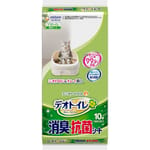
Rank 1: Unicharm Japanese 1-Week Deodorizing Antibacterial Pet Liner Original Scent for Cat Litter Pans 10 Count — This cat litter pan liner features an absorbent core designed for extended use, specifically referencing a one-week duration. The formulation includes deodorizing agents, likely activated carbon or similar compounds, to mitigate odors. Its antibacterial properties suggest the incorporation of agents that inhibit bacterial growth, contributing to hygiene. The structural design facilitates liquid absorption and retention over a prolonged period.
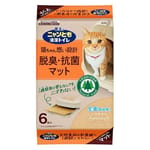
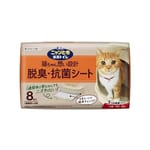
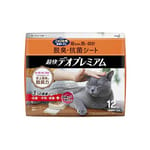
Rank 2: Kao Japanese Leaf Tree Deodorizing Antibacterial Pet Liner for Cat Litter Pans 6 Count — This cat litter pan liner incorporates a deodorizing mechanism, potentially utilizing botanical extracts or synthetic compounds to neutralize odors. Its antibacterial attributes indicate the presence of agents designed to suppress microbial proliferation. The construction is engineered for effective liquid absorption, providing a functional layer within the litter pan system.
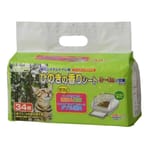
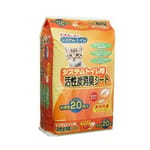
Rank 3: Clean Mew Natural Hinoki Scent Deodorizing Antibacterial Pet Liner for Cat Litter Pans 34 Count — This cat litter pan liner is characterized by the inclusion of a natural hinoki (Japanese cypress) scent, which contributes to odor management through fragrance. Beyond this, it possesses deodorizing and antibacterial properties, indicating a multi-faceted approach to hygiene. The absorbent structure is designed to contain liquid waste, and the higher count suggests a product intended for regular replacement.
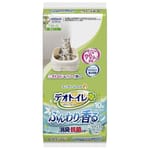
Rank 4: Unicharm Japanese 1-Week Deodorizing Antibacterial Pet Liner Floral Scent for Cat Litter Pans 10 Count — This variant of the cat litter pan liner shares the core characteristics of the original scent version, including a design for one-week usage, deodorizing agents, and antibacterial components. The distinguishing feature is the floral scent, which provides an alternative olfactory experience. The structural integrity and absorbent capacity are consistent with its intended application for extended liquid containment.
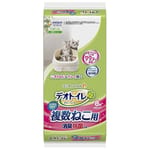
Rank 5: Unicharm Japanese 1-Week Powerful Deodorizing Antibacterial Pet Liner Original Scent for Multi-Cat Litter Pans 8 Count — This cat litter pan liner is specifically formulated for multi-cat households, implying an enhanced capacity for absorption and odor control compared to single-cat versions. It retains the one-week usage claim, powerful deodorizing capabilities, and antibacterial properties. The structural composition is likely reinforced or features a higher concentration of superabsorbent polymers to manage larger volumes of liquid waste over time.
Cat Litter Pan Liners: Quality Standards and Labeling Norms
The verifiable quality standards and labeling transparency for cat litter pan liners often pertain to their absorbent capacity, odor control efficacy, and material composition. While a universally mandated certification body for these specific products may not exist across all jurisdictions, manufacturers frequently adhere to internal quality control protocols and may cite compliance with broader consumer product safety regulations. Regarding absorbent capacity, standards typically involve laboratory testing to determine the maximum volume of liquid a cat litter pan liner can absorb under controlled conditions, often expressed in milliliters per unit weight or per pad. This metric provides an objective measure of the liner's fluid retention capability. Odor control efficacy, while more challenging to quantify objectively, is often evaluated through standardized sniff tests or gas chromatography to measure the reduction of specific odor-causing compounds like ammonia. Manufacturers may label cat litter pan liners with claims such as "1-week odor control" or "antibacterial," and these claims are generally substantiated by internal or third-party testing data. Material composition labeling is crucial for transparency. Manufacturers typically list the primary components, such as superabsorbent polymers, cellulose pulp, non-woven fabrics, and polyethylene films. The inclusion of activated carbon, zeolite, or specific fragrances is also commonly disclosed. Some cat litter pan liners may carry labels indicating they are "biodegradable" or "eco-friendly," which would necessitate adherence to recognized standards for biodegradability, often involving specific degradation rates under defined environmental conditions. Documentation norms for these products frequently include clear instructions for proper disposal, warnings regarding ingestion, and storage recommendations to maintain product integrity. Batch numbers and manufacturing dates are also common elements on packaging, facilitating traceability and quality assurance. Adherence to these labeling norms allows consumers to make informed assessments based on objective product characteristics rather than subjective claims, understanding the functional parameters of a given cat litter pan liner.
Cat Litter Pan Liners: Factual Insights
A verifiable factual insight regarding cat litter pan liners relates to the chemical mechanism of superabsorbent polymers (SAPs). The primary SAPs used in these liners, typically sodium polyacrylate, function through a process of osmosis. The polymer chains contain carboxylate groups that, when hydrated, repel each other due to negative charges. This repulsion creates space within the polymer network, allowing water molecules to be drawn in and held within the structure. The cross-linked nature of the polymer prevents it from dissolving, instead forming a stable, gel-like substance that encapsulates the liquid. This process allows the cat litter pan liner to absorb hundreds of times its weight in water, a property critical for effective liquid waste management. Another factual insight concerns the role of activated carbon in odor mitigation within a cat litter pan liner. Activated carbon is produced by heating carbonaceous material in the absence of oxygen, followed by activation with steam or chemicals to create a highly porous structure. This process results in an enormous internal surface area, sometimes exceeding 1,000 square meters per gram. Odor molecules, which are typically organic compounds, are then adsorbed onto this vast surface through weak intermolecular forces, known as Van der Waals forces. This physical adsorption process effectively traps the odor molecules within the carbon's pores, preventing their release into the surrounding air. The efficacy of a cat litter pan liner with activated carbon for odor control is directly proportional to the surface area and pore size distribution of the carbon incorporated.
This document has provided an objective classification of cat litter pan liners, detailing their structural attributes, material compositions, and operational characteristics within various contexts. The information presented is exclusively factual, focusing on verifiable properties and industry-standard classifications.
......View All








![日本IRIS 日本IRIS 消臭寵物尿片尿墊 貓砂盆專用 [43x31cm 10枚] TIH-10C 正面圖](https://www.dogchillhk.com/m/22530-1639129109-1.jpg)