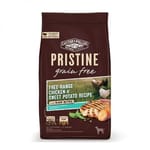
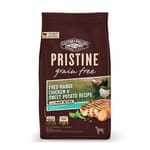
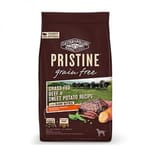
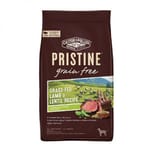
Dog food refers to food products specifically formulated for canines, providing the essential nutrients required for their growth and health maintenance. The market offers a wide variety of dog food types, encompassing different formulations and forms to cater to dogs' dietary needs at various life stages or for specific requirements. These products typically contain ingredients such as proteins, fats, carbohydrates, vitamins, and minerals, all aimed at supporting a dog's daily activities and physiological functions. Some dog food is specifically tailored for certain breeds, sizes, or age groups. For instance, puppy dog food focuses on growth and development, adult dog food maintains daily needs, and senior dog food may include more joint care components. Furthermore, specialized products like freeze-dried dog food offer diverse options. The selection of dog food usually considers ingredient sources, nutritional balance, and the dog's palatability.
Dog food, a manufactured dietary product specifically formulated for canines, constitutes a broad category of nutritional provisions designed to meet the physiological requirements of domestic dogs.
This article aims to describe the structural attributes, material composition, and usage contexts within the dog food category, focusing on verifiable, objective information. It does not intend to recommend specific products or provide comparative analysis of their advantages.
Dog Food: Common Classifications and Forms
The dog food category is commonly divided based on its physical form and moisture content, which directly influences its manufacturing processes and preservation methods. These classifications include dry dog food, wet dog food, semi-moist dog food, and raw or freeze-dried dog food. Dry dog food, often referred to as kibble, is characterized by its low moisture content, typically ranging from 3% to 12%. This low moisture level contributes to its extended shelf life and ease of storage. The production of dry dog food generally involves extrusion, a process where ingredients are mixed, cooked under high pressure and temperature, and then forced through a die to form specific shapes before being dried. Wet dog food, in contrast, contains a high moisture content, often between 70% and 85%. It is typically packaged in cans, pouches, or trays and undergoes a sterilization process after packaging to ensure microbial stability. Semi-moist dog food occupies an intermediate position, with moisture content typically between 15% and 30%. This type of dog food often has a soft, chewy texture due to humectants like propylene glycol, which help retain moisture. Raw dog food, including freeze-dried dog food, represents another distinct classification. Raw diets typically consist of uncooked meat, bones, and organs, sometimes supplemented with fruits and vegetables. Freeze-dried dog food is a variant of raw food where the moisture is removed through a sublimation process, making it shelf-stable without refrigeration while retaining many characteristics of raw ingredients. These fundamental physical distinctions in dog food influence handling, storage, and the specific nutritional delivery mechanisms.
Dog Food: Material Composition and Processing Techniques
The material composition of dog food varies significantly across different formulations, impacting its nutritional profile and physical properties. Primary ingredients typically include protein sources, carbohydrates, fats, vitamins, and minerals. Protein sources often consist of animal-derived components such as chicken meal, beef, lamb, fish, or plant-based proteins like peas and lentils. The quality and digestibility of these protein sources are factors in formulation. Carbohydrates serve as an energy source and often come from grains like rice, corn, barley, or grain-free alternatives such as potatoes, sweet potatoes, and legumes. Fats, essential for energy, skin and coat health, and vitamin absorption, are typically sourced from animal fats (e.g., chicken fat) or plant oils (e.g., flaxseed oil, sunflower oil). The manufacturing process for dog food is central to its final characteristics. For dry kibble, extrusion cooking is a prevalent method. This process involves grinding raw ingredients, mixing them with water to form a dough, and then cooking them under high heat and pressure as they pass through an extruder. The mixture is then cut into uniform shapes and dried. This method gelatinizes starches, improves digestibility, and sterilizes the product. Wet dog food production involves mixing ingredients, cooking them, and then sealing them into containers. These containers are subsequently subjected to retort sterilization, a high-temperature, high-pressure process that ensures product safety and extends shelf life. Freeze-dried dog food involves a process called lyophilization, where raw ingredients are frozen and then placed in a vacuum chamber, causing the ice to sublimate directly into vapor. This preserves the nutritional integrity of the raw materials without significant heat degradation. Different processing techniques directly influence the nutrient availability, digestibility, and shelf stability of the final dog food product.
Dog Food: Properties Across Usage Environments
The properties of dog food can exhibit variations depending on the environmental conditions and specific usage contexts. For instance, the moisture content of dry dog food, typically low, makes it highly stable in varied ambient temperatures, provided it is stored in an airtight container to prevent moisture absorption and pest infestation. This characteristic makes dry dog food suitable for environments where refrigeration is not consistently available or for owners who prefer bulk purchasing and long-term storage. Conversely, wet dog food, with its high moisture content, requires specific storage conditions. Unopened, it maintains stability at room temperature due to its retort sterilization. However, once opened, it necessitates refrigeration to prevent microbial spoilage, typically remaining viable for a few days. This property influences its suitability for travel or outdoor activities where refrigeration might be limited. Freeze-dried dog food, while initially raw, becomes shelf-stable due to the removal of moisture. It can be stored at room temperature without refrigeration, making it convenient for travel or as a readily available option. Rehydration with water is typically required before feeding, which can be an advantage in hydrating dogs but adds a preparation step. The physical texture of dog food also plays a role in usage contexts. Dry kibble can assist in dental hygiene by providing a scrubbing action on teeth, while wet dog food offers a softer texture that may be preferred by dogs with dental issues or those needing increased hydration. The ambient humidity of a storage environment can affect the integrity of dog food, particularly dry varieties, leading to potential mold growth or nutrient degradation if not properly sealed. Understanding these property variations is essential for appropriate storage and feeding practices across different scenarios for dog food.
Dog Food: Product Characteristics Based on Sales Ranking
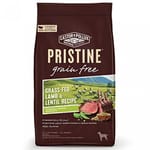
Rank 1: CASTOR & POLLUX PRISTINE Organic Grain-Free Lamb & Lentil Recipe for All Dogs, 18lbs — This dog food formulation features organic lamb as a primary protein source, combined with lentils as a carbohydrate and fiber component. The product is characterized by its grain-free composition, indicating the absence of traditional cereal grains such as corn, wheat, or soy. Its organic certification signifies adherence to specific agricultural and processing standards, often related to the absence of synthetic pesticides, fertilizers, and genetically modified organisms in its ingredients. The physical form is typically dry kibble, produced through an extrusion process, resulting in a low moisture content for extended shelf life. The inclusion of organic ingredients contributes to its specific material profile. This dog food is designed for all life stages, implying a nutrient profile that meets the requirements for growth, maintenance, and reproduction.
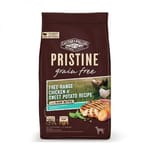
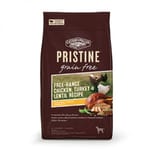
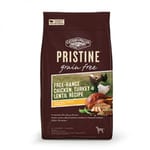
Rank 2: CASTOR & POLLUX PRISTINE Grain-Free Free-Range Chicken Turkey & Lentil Recipe for All Dogs, 4lb — This dog food contains free-range chicken and turkey as its primary animal protein sources. Lentils are incorporated for carbohydrates and fiber. The formulation is grain-free, similar to the top-ranked product, omitting common grains. The "free-range" designation for chicken and turkey indicates specific animal husbandry practices. This product is presented in a smaller 4lb package, suggesting a different purchasing pattern or suitability for smaller dog breeds. As a dry dog food, it maintains a low moisture content, contributing to its stability at ambient temperatures when stored correctly. The ingredient list emphasizes poultry-derived proteins and plant-based carbohydrate sources.
Rank 3: CASTOR & POLLUX PRISTINE Grain-Free Free-Range Chicken Turkey & Lentil Recipe for All Dogs, 10lb — This dog food shares the same material composition as the 4lb version, featuring free-range chicken and turkey, along with lentils, in a grain-free formulation. The distinguishing characteristic is its 10lb package size, offering a larger quantity than the 4lb option while being smaller than the 18lb variant. The processing method is consistent with dry kibble production, involving extrusion and subsequent drying. Its nutrient profile is formulated to be suitable for all dog life stages. The emphasis on free-range poultry indicates a specific sourcing approach for its protein components. The structural integrity of the kibble is maintained through its low moisture content.
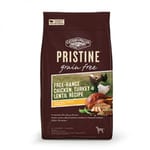
Rank 4: CASTOR & POLLUX PRISTINE Grain-Free Free-Range Chicken Turkey & Lentil Recipe for All Dogs, 18lbs — This product is identical in material composition to the 4lb and 10lb versions, utilizing free-range chicken, turkey, and lentils in a grain-free dog food recipe. Its primary differentiator is the 18lb package size, representing the largest available quantity among these specific formulations. The physical form is dry kibble, manufactured through an extrusion process, which results in a consistent texture and shape. The low moisture content ensures its shelf stability. The formulation is designed to provide complete and balanced nutrition for all dog life stages, from puppies to senior dogs, based on its ingredient ratios and vitamin/mineral supplementation.
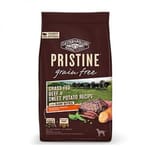
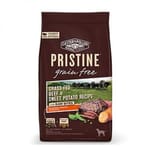
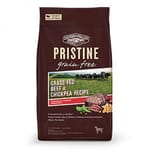
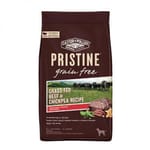
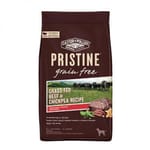
Rank 5: CASTOR & POLLUX PRISTINE Organic Grain-Free Beef & Chickpea Recipe for All Dogs, 4lb — This dog food distinguishes itself with organic beef as the primary protein source, complemented by chickpeas as a carbohydrate and fiber component. It is a grain-free formulation, avoiding traditional cereal grains. The organic certification applies to its beef and other specified ingredients, indicating adherence to organic farming and processing standards. The 4lb package size suggests a smaller volume for purchase. As a dry dog food, it has undergone an extrusion process to create kibble, resulting in a low moisture content for preservation. The ingredient profile centers on organic animal protein and legumes, providing a specific nutritional balance for dog food.
Dog Food: Quality Standards and Labeling Norms
Quality standards for dog food are primarily governed by regulatory bodies and industry associations, which establish guidelines for ingredient sourcing, manufacturing processes, and labeling. In the United States, the Association of American Feed Control Officials (AAFCO) plays a significant role in setting nutritional standards and ingredient definitions. While AAFCO itself does not regulate, its recommendations are widely adopted by state feed control officials. AAFCO provides nutrient profiles for dog food, distinguishing between formulations for growth and reproduction (suitable for puppies and pregnant/lactating dogs) and adult maintenance. Products labeled as "complete and balanced" must meet these specified nutrient profiles or pass feeding trials conducted according to AAFCO protocols. Labeling transparency in dog food is mandated to provide consumers with comprehensive information about the product. Ingredient lists are presented in descending order by weight, allowing for an understanding of the primary components. The guaranteed analysis panel provides minimum percentages of crude protein and crude fat, and maximum percentages of crude fiber and moisture. Some labels also include specific claims, such as "organic," "grain-free," or "natural," which are usually defined by regulatory bodies or industry standards. For example, "organic" dog food must adhere to specific standards set by the USDA National Organic Program in the US. Manufacturing facilities for dog food are often subject to inspections by regulatory agencies to ensure compliance with good manufacturing practices (GMPs), which cover sanitation, hazard prevention, and quality control. Documentation norms typically require manufacturers to maintain records of ingredient suppliers, production batches, and quality control tests. These standards and labeling requirements aim to ensure the safety, nutritional adequacy, and accurate representation of dog food products to the public.
Dog Food: Verifiable Factual Insights
A verifiable factual insight regarding dog food concerns the historical development of its commercialization. The first commercially prepared dog food, known as "Spratt's Patent Meat Fibrine Dog Cakes," was introduced in England in 1860 by James Spratt. This dog food was composed of wheat meals, vegetables, beetroot, and beef blood, representing an early attempt to provide a standardized, convenient diet for dogs. Its emergence marked a significant shift from feeding dogs table scraps or raw meat to providing specially formulated rations. This innovation laid the groundwork for the industrial production of dry dog food that dominates the market today. Another verifiable insight pertains to the role of extrusion in modern dry dog food production. The extrusion process, widely adopted in the mid-20th century, revolutionized the manufacturing of dry dog food. This method not only enabled the production of uniform kibble shapes but also improved the digestibility of starches and proteins by cooking the ingredients under high heat and pressure. The high temperatures involved also serve to sterilize the product, reducing microbial load and enhancing shelf stability. This technological advancement significantly contributed to the widespread availability and safety of dry dog food, making it a staple dietary component for domestic canines globally.
This comprehensive overview has detailed the fundamental classifications, material compositions, processing techniques, and quality assurance aspects of dog food. The discussion has focused on objective characteristics without offering any form of evaluation or purchasing recommendation.
......View All