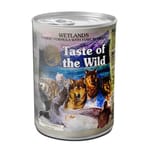
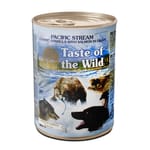
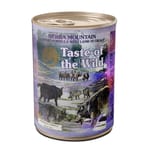
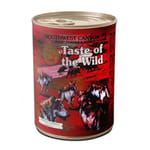
The Taste of the Wild canned dog food range encompasses various formulas designed to offer dogs balanced wet food options. These products typically feature meat as the primary ingredient, complemented by assorted vegetables, fruits, and plant-based protein sources. Different formulations may be crafted for puppies or adult dogs, providing a diverse selection of protein sources such as venison, bison, salmon, and duck to cater to varying canine dietary requirements. The texture of Taste of the Wild canned dog food is commonly presented as pâté or chunks, facilitating easy consumption and digestion for dogs. Product packaging predominantly consists of cans, which are convenient for storage and feeding, ensuring the freshness and ease of use of the contents. This category serves as a supplement to a dog's daily diet and can also be integrated with main meals. For pet owners exploring wet food choices for their dogs, this Taste of the Wild canned dog food classification presents a wide array of choices, allowing for detailed examination of each formula's ingredients.
The category of Taste of the Wild dog wet food encompasses a range of moist feeding options designed for canines, typically presented in sealed containers for preservation and portion control.
This article aims to describe the structural attributes, material composition, and usage contexts within this specific product category. The information presented is intended to provide an understanding of the product characteristics and does not serve to recommend specific products or compare their advantages.
Taste of the Wild Dog Wet Food: Structural Divisions
Taste of the Wild dog wet food is commonly divided based on its primary function and consistency. One prominent division is between complete and balanced meals, formulated to provide all necessary nutrients for a dog's diet, and supplemental wet foods, which are intended to be fed alongside other food sources. The physical structure of these products also varies, often categorized by the size and form of the meat components, such as shredded, diced, or pâté. Furthermore, the presence or absence of specific ingredients, like grains, forms another basis for classification within the Taste of the Wild dog wet food range. These distinctions are typically indicated on product labeling, providing consumers with information regarding the product's intended role in a dog's nutritional regimen.
Taste of the Wild Dog Wet Food: Material Composition and Formulation
The material composition of Taste of the Wild dog wet food is primarily characterized by its protein sources, often derived from various animal proteins, and the accompanying moisture content. Typical formulations feature a high percentage of animal-derived ingredients, such as chicken, salmon, lamb, or beef. These protein sources contribute to the amino acid profile of the food. Beyond proteins, formulations include fats, often from animal sources or added oils, which provide caloric density and essential fatty acids. Carbohydrate sources, when present, may include legumes or vegetables, depending on whether the formulation is grain-free. Vitamins and minerals are incorporated to meet established nutritional standards for canine diets. The high moisture content, frequently exceeding 70%, is a defining characteristic of Taste of the Wild dog wet food, differentiating it from dry kibble. This moisture is typically provided through water or broth, which also influences the product's texture and palatability. Processing techniques involve cooking the ingredients, often under pressure, before sealing them in cans to ensure sterility and extend shelf life. The specific ratios of these components are determined by the nutritional targets for different life stages or dietary needs, such as those for puppies or adult dogs. Understanding the material composition provides insight into the nutritional profile of each Taste of the Wild dog wet food offering.
Taste of the Wild Dog Wet Food: Usage Contexts and Environmental Factors
The properties of Taste of the Wild dog wet food can vary across different usage environments or conditions, primarily due to factors such as temperature, storage, and the presence of air. Unopened cans maintain their integrity and nutritional profile when stored in cool, dry conditions, away from direct sunlight. Once opened, exposure to air initiates oxidation processes, which can alter the food's aroma, texture, and nutritional stability over time. Refrigeration is typically required for opened Taste of the Wild dog wet food to slow down spoilage and maintain freshness. The palatability of the food, while not a material characteristic, can be influenced by its temperature; some dogs may prefer food served at room temperature rather than directly from refrigeration. The structural integrity of the food, particularly formulations with distinct meat chunks or shreds, can be affected by prolonged storage after opening, potentially leading to drying out if not properly sealed. Furthermore, the nutrient stability of certain vitamins can be sensitive to prolonged exposure to light and heat, although the canning process mitigates much of this risk prior to opening. The environment in which the Taste of the Wild dog wet food is consumed, such as outdoor settings, may necessitate quicker consumption to prevent contamination or spoilage. These considerations highlight the importance of proper handling and storage to maintain the intended characteristics of the Taste of the Wild dog wet food product.
Taste of the Wild Dog Wet Food: Product Characteristics by Sales Ranking
The following descriptions are based on product information and focus solely on material, formulation, and structural characteristics, without offering usage recommendations or comparative advantages. These products represent popular offerings within the Taste of the Wild dog wet food category.
Rank 1: Taste of the Wild Grain-Free Canned Dog Wet Food Stew with Chicken Bites 390g — This formulation of Taste of the Wild dog wet food features chicken as a primary protein source, presented in a stew-like consistency with discernible chicken bites. The composition is grain-free, indicating the absence of cereal grains such as corn, wheat, or soy. The product is characterized by a high moisture content, typical of wet food, with the chicken bites suspended in a broth or gravy. The 390g can size indicates a standard individual serving or portion. The processing method involves cooking and canning to ensure a sterile and shelf-stable product. This Taste of the Wild dog wet food variant emphasizes a meat-centric profile within a moist, palatable matrix.
Rank 2: Taste of the Wild Grain-Free Canned Dog Wet Food Stew with Salmon Bites 390g — This Taste of the Wild dog wet food product utilizes salmon as the main protein component. The texture is a stew, containing distinct salmon bites within a liquid base. Similar to other formulations in this line, it is grain-free, focusing on alternative carbohydrate sources or a higher protein-to-carbohydrate ratio. The 390g packaging provides a consistent unit volume. The intrinsic oils found in salmon contribute to the fat content of this Taste of the Wild dog wet food, alongside other fats and moisture. The canning process ensures the preservation of the ingredients and nutritional integrity until opened. This variant is designed to offer a different protein profile compared to poultry-based options.
Rank 3: Taste of the Wild Grain-Free Canned Dog Wet Food Stew with Lamb Bites 390g — Featuring lamb as its primary animal protein, this Taste of the Wild dog wet food is also presented as a stew with visible lamb bites. The formulation is grain-free, aligning with specific dietary preferences or requirements. The 390g can contains the product in a moist, gravy-like consistency. Lamb provides a distinct protein and fat composition. The manufacturing process involves controlled cooking and hermetic sealing to maintain product quality and safety. This Taste of the Wild dog wet food offers a red meat alternative within the wet food range, characterized by its specific protein source and texture.
Rank 4: Taste of the Wild Grain-Free Canned Dog Wet Food Stew with Beef Bites 390g — This Taste of the Wild dog wet food variant is formulated with beef as the central protein ingredient. It is structured as a stew, incorporating beef bites within a rich, moist base. The grain-free nature of the recipe indicates the exclusion of common cereal grains. The 390g unit size is consistent across this product line. Beef contributes a specific set of amino acids and fatty acids to the overall nutritional profile. The production method involves cooking the ingredients and then sealing them in cans to create a shelf-stable product. This Taste of the Wild dog wet food provides another red meat option, distinguished by its beef content and stew texture.
Taste of the Wild Dog Wet Food: Quality Standards and Labeling Norms
Quality standards for Taste of the Wild dog wet food are governed by regulatory bodies and industry associations, ensuring product safety and nutritional adequacy. In the United States, for example, the Association of American Feed Control Officials (AAFCO) establishes nutrient profiles for dog foods, and products claiming to be "complete and balanced" must meet these guidelines for specific life stages (e.g., growth, adult maintenance, all life stages). Labeling on Taste of the Wild dog wet food products typically includes a guaranteed analysis, which specifies minimum percentages for crude protein and crude fat, and maximum percentages for crude fiber and moisture. The ingredient list is presented in descending order by weight, providing transparency regarding the raw materials used. Manufacturers are also required to include feeding guidelines, a "best by" date, and the net weight of the product. The term "grain-free" on Taste of the Wild dog wet food labels indicates the absence of common cereal grains. Manufacturing facilities often adhere to Good Manufacturing Practices (GMPs) to ensure consistent quality and safety during production. These verifiable standards and labeling norms provide consumers with objective information about the composition and intended use of Taste of the Wild dog wet food.
Taste of the Wild Dog Wet Food: Factual Insights
A factual insight regarding Taste of the Wild dog wet food is its typical energy density relative to dry kibble. Due to the high moisture content, wet food generally has a lower caloric density per unit of weight compared to dry food. This means that a larger volume or weight of wet food is often required to provide the same amount of calories as a smaller volume of dry food. Another verifiable insight is that the canning process for Taste of the Wild dog wet food, which involves heating the ingredients to high temperatures and then sealing them in an airtight container, effectively sterilizes the product. This sterilization eliminates microorganisms, contributing to the extended shelf life of unopened cans without the need for refrigeration or chemical preservatives beyond what is naturally present in the ingredients or added as vitamins.
This article has described the structural attributes, material composition, and usage contexts of Taste of the Wild dog wet food. The information presented is based on verifiable characteristics and aims to provide a clear understanding of the product category.
......View All