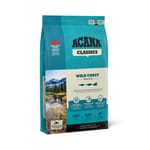
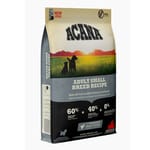
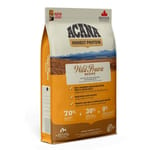
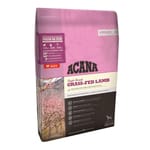
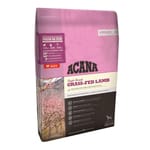
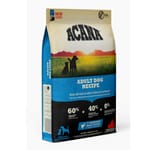
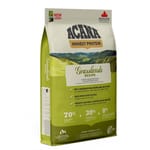
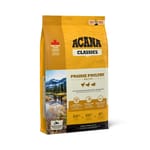
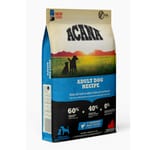
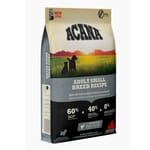
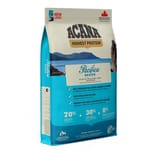
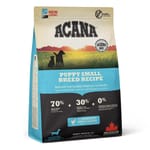
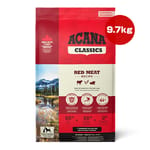
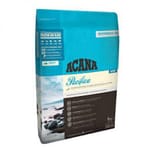
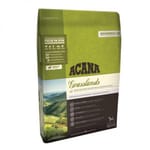
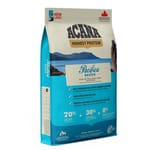
The ACANA dog food category encompasses formulations designed for various life stages and nutritional requirements of dogs. Products within this classification are primarily composed of meat proteins, fats, and specific proportions of vegetables, fruits, and botanical ingredients, aiming to provide balanced nutrition. ACANA dog food formulations typically consider factors such as a dog's weight, age, and activity level, exemplified by puppy-specific ACANA puppy food or maintenance formulas for adult dogs. The ingredient ratios and types vary across different ACANA dog food products to accommodate diverse canine digestive systems and nutritional needs. This product series does not contain artificial additives, with its ingredients largely sourced from natural origins, emphasizing the inherent quality of the components. When selecting, pet owners can choose suitable ACANA dog food based on their dog's specific conditions, such as tolerance to certain ingredients or nutritional requirements. This category aims to present the composition and applicability of various formulas, assisting owners in understanding the distinctions between products.
ACANA dog food encompasses a range of formulations designed for canine nutrition, characterized by specific ingredient profiles and manufacturing processes.
This article aims to describe the structural attributes, material composition, and usage contexts within the ACANA dog food category, focusing on objective, verifiable information rather than product recommendations or comparative evaluations.
ACANA Dog Food: Categorization by Dietary Philosophy
ACANA dog food products are commonly divided based on their underlying dietary philosophies, which dictate the primary ingredient sourcing and formulation principles. One prevalent classification distinguishes between grain-inclusive and grain-free formulations. Grain-inclusive varieties often incorporate oats or other whole grains, while grain-free options exclude these ingredients, typically substituting them with legumes or other carbohydrate sources. Another significant categorization involves the protein source concentration and diversity. Some formulations emphasize single animal protein sources, such as lamb or duck, often marketed for dogs with specific dietary sensitivities. Conversely, other ACANA dog food lines feature multiple animal protein sources, reflecting a broader omnivorous dietary approach. Further distinctions exist based on the life stage for which the food is intended, such as puppy, adult, or senior formulations, each adjusted for varying nutritional requirements. The geographical inspiration for ingredients, such as regional or classic recipes, also serves as a classification element, often indicating the type and origin of included animal proteins and botanicals. These different approaches reflect varied nutritional goals and ingredient preferences within the ACANA dog food spectrum.
ACANA Dog Food: Material Composition and Formulation Methods
The material composition of ACANA dog food is structured around ratios of animal protein, fat, and carbohydrates, complemented by various botanical ingredients and supplements. Animal protein sources frequently include fresh or raw meats, poultry, and fish, often listed as the first ingredients to indicate their proportional dominance. These proteins contribute essential amino acids for muscle development and maintenance. Fats are derived from animal sources, such as chicken fat or fish oil, and plant sources, providing concentrated energy and aiding in nutrient absorption. Carbohydrate components in grain-free ACANA dog food typically consist of lentils, peas, or chickpeas, which offer dietary fiber and complex carbohydrates. Grain-inclusive options may utilize whole oats or other grains for similar purposes. Botanical inclusions, such as fruits, vegetables, and herbs, are incorporated for their vitamin, mineral, and antioxidant content. The formulation methods employed often involve a "whole prey" approach, aiming to include meat, organs, and cartilage in proportions that mimic a natural canine diet. This method contributes to a comprehensive nutrient profile without extensive synthetic supplementation. The processing typically involves low-temperature cooking methods to preserve nutrient integrity. Specific formulations for ACANA dog food may vary in their precise ratios of these components, tailoring them to distinct nutritional profiles for different canine needs.
ACANA Dog Food: Properties Across Usage Environments
The properties of ACANA dog food formulations exhibit variations across different usage environments and conditions, primarily due to factors like ingredient stability, storage requirements, and the specific physiological demands of the dog. In environments with high humidity, the moisture content of kibble becomes a consideration for storage, as excessive moisture can accelerate spoilage. Conversely, in arid climates, ensuring adequate hydration alongside dry food consumption is a standard practice. The caloric density of certain ACANA dog food recipes, such as those designed for highly active dogs, means that portion control must be carefully managed to prevent overfeeding in less active settings. For working dogs or those in colder climates, formulations with higher fat content provide additional energy to meet increased metabolic demands. In contrast, senior dog formulations often feature reduced caloric density and joint support ingredients, tailored for dogs with lower activity levels and age-related physiological changes. The palatability of ACANA dog food, while generally consistent, can be influenced by individual canine preferences, which may vary across different breeds or ages, irrespective of the environmental conditions. Furthermore, the handling and storage of ACANA dog food in various environments directly impact its shelf life and nutritional integrity, necessitating adherence to manufacturer guidelines regarding cool, dry storage away from direct sunlight.
ACANA Dog Food: Product Characteristics Based on Sales Ranking
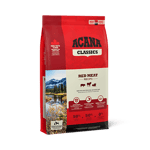
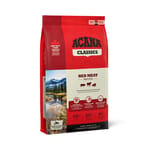
Rank 1: ACANA Dog Food Classic Red Meat 14.5kg (ADCR15K) — This formulation is characterized by its inclusion of multiple red meat protein sources, typically comprising beef, pork, and lamb. The ingredient profile is designed to reflect a "classic" approach to canine nutrition, often incorporating a significant percentage of animal ingredients. The kibble structure is a standard dry form, engineered for shelf stability and ease of feeding. The 14.5kg package size indicates its intended use for sustained feeding or larger canine breeds. The protein content is derived from various animal tissues, providing a comprehensive amino acid profile. This ACANA dog food variant represents a traditional blend of multiple animal proteins.
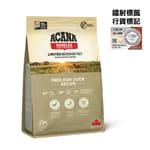
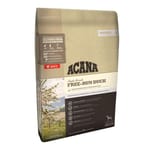
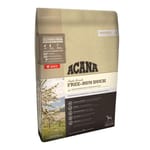
Rank 2: ACANA Grain-Free Dog Food Single Animal Protein Series Free-Run Duck Recipe 11.4kg (ADFD11K) — This ACANA dog food product is defined by its grain-free composition and reliance on a single animal protein source: free-run duck. The exclusion of grains means that carbohydrate sources are typically derived from legumes such as lentils and peas. The emphasis on a single protein source is a common characteristic for formulations aimed at dogs with sensitivities to multiple protein types. The 11.4kg package offers a substantial supply for regular feeding. The duck protein provides a specific amino acid spectrum, distinguishing it from multi-protein formulations. This ACANA dog food recipe focuses on specific ingredient simplification.
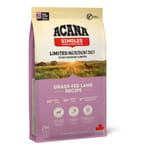
Rank 3: ACANA Grain-Free Dog Food Single Animal Protein Series Grass-Fed Lamb Recipe 11.4kg (ADLA11K) — Similar to the duck recipe, this ACANA dog food variant is grain-free and features a single animal protein source, in this case, grass-fed lamb. The lamb is sourced from specific farming practices, which may influence the fatty acid profile and overall nutrient composition. As a single-protein, grain-free option, it caters to dietary management requirements. The 11.4kg unit size is consistent with other specialty formulations. The lamb provides a distinct flavor profile and amino acid composition compared to poultry or other red meats. This ACANA dog food choice targets specific protein source preference and dietary management.
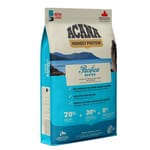
Rank 4: ACANA Grain-Free Dog Food Regional Series Pacific Recipe 11.4kg (ADP11K) — This ACANA dog food formulation is characterized by its grain-free nature and a blend of fish proteins sourced from specific regional waters, reflecting a "Pacific" theme. The protein sources typically include a variety of fish such as salmon, herring, and flounder, providing a diverse range of omega-3 fatty acids and other marine-derived nutrients. The carbohydrate base is composed of legumes and botanicals, consistent with grain-free principles. The 11.4kg package size is standard for this series. The mixture of fish proteins contributes to a distinct nutritional profile focused on aquatic ingredients. This ACANA dog food product offers a regional ingredient focus with multiple fish proteins.
Rank 5: ACANA Grain-Free Dog Food Single Animal Protein Series Free-Run Duck Recipe 6kg (ADFD6K) — This ACANA dog food product is identical in its ingredient profile to the 11.4kg version of the Free-Run Duck Recipe, being grain-free and featuring free-run duck as the sole animal protein. The primary distinction is the package size, which at 6kg, is designed for smaller dogs, households with limited storage, or for trial purposes. The material composition, including the specific duck protein and legume-based carbohydrates, remains consistent. This ACANA dog food variant maintains the same specialized formulation in a more compact quantity.
ACANA Dog Food: Quality Standards and Labeling Transparency
The manufacturing of ACANA dog food adheres to specific quality standards and practices that are reflected in its labeling and documentation. Production facilities are subject to regulatory oversight in the regions where they operate, which often includes inspections for hygiene, ingredient handling, and processing methods. Ingredient sourcing is a key aspect of these standards, with an emphasis on traceable origins for animal proteins, fruits, and vegetables. This traceability contributes to the verifiable nature of claims regarding ingredient quality and origin. Labeling practices for ACANA dog food typically include a detailed ingredient list, presented in descending order by weight, allowing consumers to identify the primary components. Nutritional guarantees are provided, specifying minimum percentages of crude protein and fat, and maximum percentages of crude fiber and moisture. These guarantees are established through laboratory analysis of the finished product. Date codes, such as manufacturing dates and best-before dates, are also present, indicating the product's freshness and shelf life. Furthermore, information regarding calorie content is usually provided, expressed in kilocalories per kilogram or per cup, which assists in portion management. The commitment to transparent labeling provides a verifiable record of the product's composition and nutritional value, which is a consistent characteristic of ACANA dog food offerings.
ACANA Dog Food: Factual Insights
A notable characteristic of ACANA dog food formulations is the consistent inclusion of a high percentage of animal ingredients, often exceeding 50% of the total composition. This proportion is a defining structural attribute that differentiates it from many other commercial dog food brands, which may rely more heavily on plant-based proteins or carbohydrate fillers. This emphasis on animal products directly influences the macronutrient profile, typically resulting in higher protein and fat levels. Another factual insight concerns the use of specific cooking technologies. ACANA dog food often employs a steam-cooking process at relatively low temperatures. This method is utilized to preserve the nutritional integrity and biological value of the raw ingredients, particularly heat-sensitive vitamins and enzymes, which can be degraded by higher temperatures during extrusion. This processing choice is a fundamental aspect of their manufacturing approach, aiming to maintain the inherent qualities of the ingredients in the final kibble product.
The discussion has outlined the structural attributes, material composition, processing methods, and quality standards associated with ACANA dog food, providing an objective overview of the category.
......View All