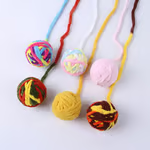
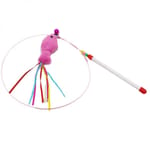
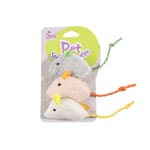
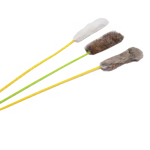
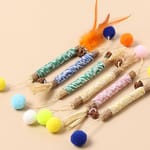
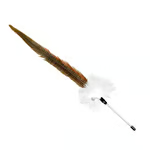
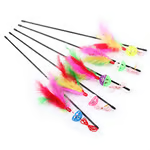
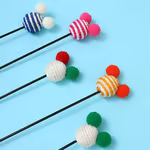
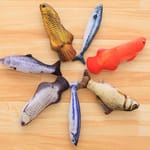
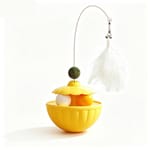
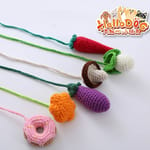
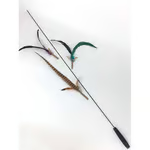
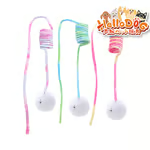
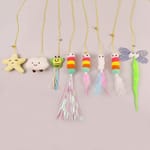
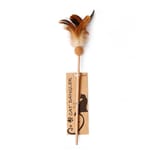
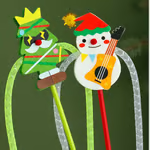
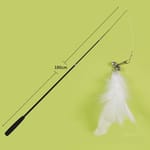
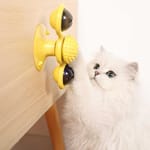
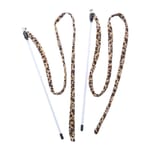
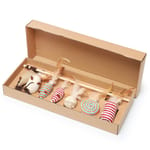
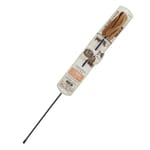
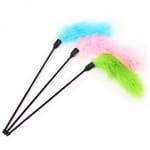
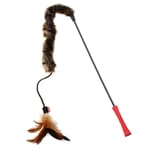
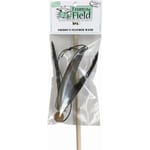
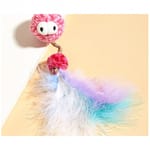
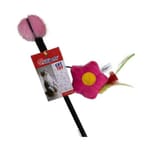
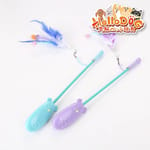
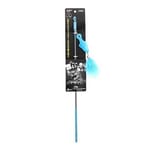
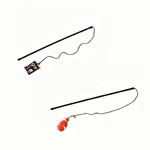
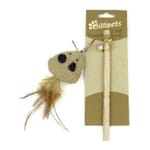
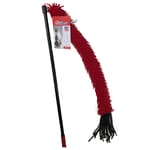
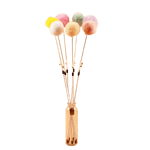
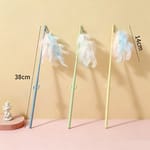
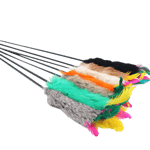
A cat wand, commonly known as a teaser wand or fishing rod toy, is a popular cat toy designed to simulate prey movement, thereby engaging a cat's natural hunting and pouncing instincts. This cat toy typically consists of a handle, a flexible string or wire, and an attractive lure attached to the end. The lures for cat wands come in various materials such as feathers, plush, plastic, or paper, often shaped like birds, insects, mice, or abstract forms. The choice of lure material and shape, combined with the length and elasticity of the string, influences the movement and speed of the toy, capturing the cat's attention. The use of a cat wand involves manipulating the handle to make the lure move around the cat, offering an interactive play experience. Some cat wands feature replaceable heads, allowing for different types of lures to be interchanged, which enhances the toy's versatility and lifespan, maintaining the cat's interest.
Wand cat toys are instruments designed for interactive play with felines, typically comprising a handle, a flexible rod, and an attachment at the end intended to stimulate a cat's predatory instincts.
This article aims to delineate the structural attributes, material compositions, and contextual applications within the category of wand cat toys. The objective is to provide a classification-focused overview, without engaging in product recommendations or comparative evaluations of specific offerings.
Wand Cat Toys: Common Divisions in Practical Use
The classification of wand cat toys in practical use often centers on the primary material or design principle of their terminal attachments. One common division separates toys based on whether the attachment is primarily feather-based or made from other materials. Feather attachments, frequently derived from natural bird plumage such as goose or pheasant feathers, often mimic the erratic flight patterns of birds or insects, which can be highly engaging for cats. Another division distinguishes between attachments that are primarily soft or plush, often containing catnip or crinkly material, and those that are more rigid, such as small plastic shapes or bells. Some wand cat toys are designed with interchangeable heads, allowing a single wand to accommodate a variety of attachments, thereby expanding its functional range without requiring multiple complete units. Furthermore, the length and flexibility of the rod component also contribute to practical categorization, with longer, more flexible rods enabling a wider range of movement and greater simulation of prey activity, contrasting with shorter, stiffer rods that offer more precise control over the attachment's motion. This structural variation influences the type of play interaction that is most effectively facilitated by each design. The handle design, whether ergonomic or simple, also impacts how the wand cat toy is manipulated during play, affecting the user's comfort and control. Materials used for the rod, such as fiberglass, plastic, or even wood, contribute to its flexibility and durability, which are key considerations in its practical application. The overall weight distribution from the handle to the tip of the wand cat toy can also influence the ease with which certain play patterns are executed. These practical divisions facilitate a structured understanding of the diverse forms available within the category.
Wand Cat Toys: Material Composition and Structural Forms
The material composition and structural forms of wand cat toys exhibit considerable variation, impacting their durability, flexibility, and the type of interaction they facilitate. The handle component is typically constructed from materials such as plastic, wood, or sometimes foam, chosen for grip and comfort during use. Plastic handles are common due to their moldability and cost-effectiveness, allowing for ergonomic designs. Wooden handles offer a more natural feel and often greater durability. The rod, extending from the handle to the attachment, is a critical structural element. Common materials for the rod include fiberglass, carbon fiber, flexible plastic, or sometimes stainless steel wire. Fiberglass rods provide a balance of flexibility and resilience, allowing for dynamic, sweeping movements. Carbon fiber offers superior strength-to-weight ratio and flexibility, often found in more premium wand cat toys. Plastic rods are generally more rigid or, conversely, extremely flexible depending on the polymer used, offering different kinetic properties. The terminal attachment, which directly interacts with the cat, is where the greatest diversity in material and form is observed. Natural feathers, often goose, turkey, or pheasant, are highly prevalent due to their inherent appeal to felines, mimicking avian prey. These feathers are typically secured to a small connector via adhesive or crimping. Synthetic materials like polyester fabric, faux fur, or various plastics are also widely used, often shaped into small animals, ribbons, or crinkly balls. Some attachments incorporate bells, which are typically small metal spheres containing a clapper, encased within the fabric or plastic. Catnip, a dried herb, is frequently integrated into fabric-based attachments, either sewn inside a pouch or infused into the material, providing an olfactory stimulant. The connection between the rod and the attachment is often a small swivel or a loop, allowing the attachment to move independently and unpredictably. Some wand cat toys feature a modular design, where the attachment can be detached and replaced, often using a clip or screw mechanism. This allows for customization and replacement of worn components. The structural integrity of the attachment point, where the lure connects to the flexible rod or string, is a key design consideration for longevity. The overall length of the wand cat toy, including the handle, rod, and string (if present), dictates the range of motion and the distance between the handler and the cat during play. This range varies significantly across different designs, from compact models to those extending over a meter. The materials selected for each part of the wand cat toy are chosen based on their functional properties, such as resistance to biting, flexibility, and overall tactile appeal to a cat.
Wand Cat Toys: Properties Across Different Usage Environments
The properties of wand cat toys can vary significantly across different usage environments, influencing their performance and longevity. In an indoor setting, for instance, the primary considerations often revolve around the toy's ability to withstand repeated clawing and biting, and its capacity to engage a cat within a confined space. Materials like durable plastics, tightly woven fabrics, and securely attached natural feathers are preferred to ensure the wand cat toy endures frequent interaction. The presence of bells or crinkly materials, while effective for attracting attention, might be deemed less suitable in environments where noise is a concern. Conversely, in an outdoor or semi-outdoor environment, such as a catio or a supervised garden area, additional factors come into play. Resistance to moisture, UV degradation, and ease of cleaning become more prominent. Materials that can quickly dry or are inherently water-resistant, such as synthetic polymers, might be favored over natural feathers which could become waterlogged or degrade faster. The visibility of the wand cat toy's attachment against varied backgrounds, such as grass or foliage, could also be a consideration, potentially leading to preferences for brightly colored attachments. The length of the rod and string on a wand cat toy might also be adapted for different spaces; a longer wand could be beneficial in a larger area, providing more extensive movement, whereas a shorter, more controlled wand might be better for tighter indoor spaces. The type of floor surface also influences material choices; for example, a wand cat toy with a plush attachment might collect debris more readily on a carpeted floor compared to a smooth, hard surface. Furthermore, the presence of multiple cats in an environment can necessitate more robust materials and designs that can withstand concurrent play and potential increased wear and tear. The storage environment also impacts the properties of wand cat toys; exposure to direct sunlight or extreme temperatures can degrade certain materials, particularly plastics and natural fibers, over time. Understanding these environmental factors allows for a more informed assessment of a wand cat toy's suitability and expected performance. The specific design of a wand cat toy, such as the ability to replace worn parts, also contributes to its adaptability across different usage conditions, extending its functional lifespan.
Wand Cat Toys: Product Information Based on Sales Ranking
This section presents product information strictly based on sales ranking, focusing on material, formulation, and structural characteristics, without offering usage recommendations or comparative evaluations. The products listed are wand cat toys or related interactive cat toys, as identified in the provided sales data.
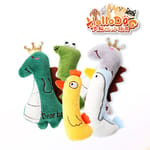
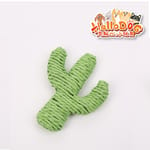
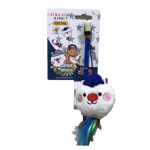
Rank 1: HelloDOG Toy Selection Catnip Stress Relief Toy Dinosaur Chick Penguin 1 piece (random style) — This item is a plush toy containing catnip, designed for chewing and interaction. Its material composition primarily consists of soft fabric, likely polyester or a similar synthetic fiber, filled with a soft batting material and dried catnip. The external structure is shaped into various animal forms, such as a dinosaur, chick, or penguin, indicating a sewn construction with distinct appendages and embroidered or appliquéd features. The "random style" designation indicates that the specific animal form received is variable. While not a traditional wand cat toy, it is an interactive item often paired with wand play.
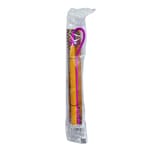
Rank 2: HelloDOG Toy Selection Cat Toy Chew and Grind Carrot Wand 1 piece — This product is a wand cat toy characterized by its carrot-shaped attachment designed for chewing and grinding. The primary material for the attachment is likely a firm, textured fabric, potentially reinforced for durability against biting and clawing. The internal structure of the carrot attachment may include crinkly material or catnip to enhance engagement. The wand component would typically be a flexible rod made of plastic or fiberglass, connecting to the carrot attachment via string or a small connector. The design suggests a focus on dental health or satisfying a cat's chewing instinct, with the wand facilitating controlled interaction.
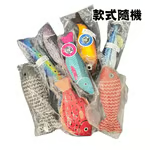
Rank 3: Aduck Toy Selection Catnip Plush Ocean Fish Toy One (random style) Ziplock Bag — This item is a plush cat toy, similar in concept to the Rank 1 product, but specifically shaped as an ocean fish. Its construction involves a fabric exterior, likely polyester, filled with soft batting and catnip. The "random style" indicates variations in fish species or color. The inclusion of a ziplock bag suggests packaging designed to preserve the potency of the catnip. Like the Rank 1 item, this is a standalone interactive toy rather than a direct wand cat toy, though it can be utilized in conjunction with wand play by being dangled or tied.
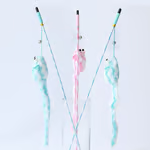
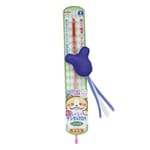
Rank 4: HelloDOG Toy Selection Wand Cat Toy Rainbow Stripe Bell (random style) — This is a classic wand cat toy featuring a rainbow-striped attachment and a bell. The wand component would consist of a handle and a flexible rod, typically made from plastic or fiberglass. The attachment likely comprises strips of colorful fabric, possibly polyester or ribbon, arranged to create a "rainbow stripe" effect. A small metal bell, containing a clapper, is integrated into or attached to the fabric lure, producing auditory stimulation during movement. The "random style" could refer to variations in the specific color arrangement or bell type. This wand cat toy relies on visual appeal and sound to attract feline attention.
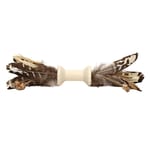
Rank 5: HelloDOG Toy Selection Cat Toy Matatabi Gall Feather Wand One (random style) — This wand cat toy incorporates matatabi galls and natural feathers into its attachment. The wand structure includes a handle and a flexible rod. The attachment features matatabi galls, which are dried, hard nodules from the Actinidia polygama plant, known for containing compounds that stimulate some cats. These galls are typically attached to the wand via a string or wire, often accompanied by natural feathers, such as goose or turkey feathers, secured to the same connector. The combination of olfactory stimulation from the matatabi and the visual/tactile appeal of feathers aims to maximize feline engagement. The "random style" might indicate variations in feather type, color, or the specific shape/size of the matatabi galls. This wand cat toy exemplifies the use of natural, multi-sensory components.
Wand Cat Toys: Quality Standards and Labeling Transparency
Quality standards and labeling transparency for wand cat toys are primarily concerned with material safety, structural integrity, and the provision of clear information to the consumer. While specific, universally mandated industry standards comparable to those in food or pharmaceuticals are not always present for pet toys, reputable manufacturers often adhere to voluntary guidelines or their own internal quality control protocols. A key aspect of quality pertains to the materials used. For instance, plastics should ideally be non-toxic and free from harmful chemicals such as phthalates or BPA, especially since cats may chew on the toys. Manufacturers demonstrating transparency often provide declarations of material safety, either on product packaging or through their official websites. Natural feathers used in wand cat toys should be securely attached to prevent detachment and ingestion, and ideally sourced ethically, though this is less frequently detailed on labels. The dyes used on feathers or fabric components should also be non-toxic and colorfast to prevent transfer. For components like bells, the quality standard often involves ensuring they are firmly embedded or attached to prevent accidental swallowing. The structural integrity of the wand cat toy, particularly the connection points between the handle, rod, and attachment, is crucial. Labeling may indicate durability testing or recommended age ranges for cats, though these are not always standardized across the industry. When catnip or matatabi is included, labeling should ideally specify the origin and purity of these natural stimulants. Transparency in labeling also extends to providing clear instructions for use and any necessary warnings, such as "supervise play" or "inspect regularly for damage." While a comprehensive, globally recognized certification for wand cat toys is not ubiquitous, consumers can often infer quality from manufacturers who provide detailed material breakdowns, safety assurances, and clear usage guidelines. The absence of specific warnings or material disclosures on a wand cat toy's packaging may indicate a lower level of transparency regarding its composition and safety. The durability claims, if present, should ideally be backed by verifiable testing data, though this is rarely presented on consumer packaging. The ability to identify the components of a wand cat toy through clear labeling assists in making informed decisions about its suitability for a particular pet. Some regions may have general product safety regulations that indirectly apply to pet toys, requiring them to be free from sharp edges or small parts that could pose a choking hazard, further influencing the design and labeling of wand cat toys.
Wand Cat Toys: Factual Insights
One verifiable factual insight regarding wand cat toys relates to the specific wavelengths of light that are most visible to felines. Cats possess dichromatic vision, primarily perceiving colors in the blue and green spectrum, and are largely insensitive to red light. This means that while a human might perceive a red-feathered wand cat toy as distinctly red, a cat's perception would be closer to a shade of gray or green. Consequently, the visual appeal of a wand cat toy with red components, from a cat's perspective, may not be as vibrant or distinct as perceived by a human. This physiological difference in color perception influences the effectiveness of certain color schemes in stimulating a cat's visual hunting instincts, suggesting that blues and greens might be more salient to a cat during play. Another factual insight concerns the olfactory stimulants frequently incorporated into wand cat toys, specifically catnip (Nepeta cataria) and matatabi (Actinidia polygama). While catnip is widely known for its stimulating effects on a significant portion of the feline population, it is estimated that approximately 30-50% of cats do not respond to it due to a genetic predisposition. Matatabi, also known as silvervine, contains actinidine and dihydroactinidiolide, which are structurally similar to nepetalactone, the active compound in catnip. Studies indicate that matatabi elicits a positive response in a greater percentage of cats, reportedly affecting up to 80% of felines, including many that do not react to catnip. This difference in efficacy highlights the varied neurobiological responses among individual cats to these plant-derived compounds, underscoring why some wand cat toys incorporate one or both stimulants to broaden their appeal. The inclusion of matatabi in a wand cat toy, therefore, increases the probability of eliciting a euphoric or playful response compared to catnip alone, due to its broader effective range across the feline population.
This overview has provided a structured examination of wand cat toys, detailing their classification, material constituents, structural variations, and contextual performance. The information presented is intended to characterize the category based on objective attributes, maintaining a neutral and factual perspective throughout.
......View All