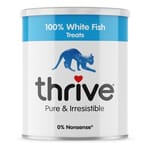
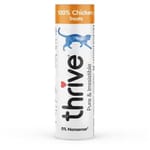
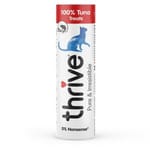
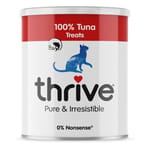
The Thrive cat and dog treats category encompasses a variety of pet snack products, primarily catering to the daily reward or supplementary needs of cats and dogs. This product range offers diverse forms, including freeze-dried treats and meat paste treats, designed to accommodate different pets' dietary preferences and chewing habits. When selecting Thrive cat and dog treats, considerations can be made based on the pet's size, age, and specific dietary requirements. For instance, some products might be formulated specifically for kittens or puppies, while others are suitable for adult pets. Products within this category are intended as supplementary additions to regular meals, providing pets with a varied flavor experience. When referencing specific flavors such as Thrive Ocean Fish, consumers can further investigate their ingredients and suitability to ensure the chosen treats align with their pet's health management plan. These types of products are typically made from single or multiple protein sources, offering daily nutritional supplementation for pets, but they are not intended to replace a balanced main diet.
Thrive freeze-dried pet treats, encompassing both cat and dog varieties, represent a distinct category within the broader pet food and supplement market, characterized by specific processing methods and material compositions.
This article aims to describe the structural attributes, material components, and processing methodologies inherent to this category of pet consumables. The objective is to provide an objective classification and understanding of these products, rather than to recommend specific items or compare their respective merits.
Thrive Freeze-Dried Pet Treats: Classification by Animal Application
Within the domain of Thrive freeze-dried pet treats, classification often commences with the intended animal application. While many products are formulated for dual use, serving both felines and canines, specific formulations or ingredient profiles can sometimes delineate a primary target species. This dual-application approach typically involves ingredients that are nutritionally beneficial and palatable to both cats and dogs, such as various muscle meats or organs. The fundamental nutritional requirements for carnivores and omnivores, while sharing some commonalities, also present distinct differences, particularly concerning amino acid profiles, vitamin needs, and fat metabolism. For instance, cats, as obligate carnivores, require higher levels of certain amino acids like taurine, which are naturally abundant in animal tissues. Dogs, being omnivores, possess a broader dietary flexibility. The practical application of a single product across both species therefore necessitates a careful selection of raw materials that inherently meet or exceed the baseline nutritional requirements for both. This approach streamlines production and offers convenience for multi-pet households, minimizing the need for separate treat inventories. The primary division, therefore, hinges on whether a treat is explicitly marketed for cats, dogs, or both, with the majority of Thrive freeze-dried pet treats falling into the latter category due to their foundational ingredient choices.
Thrive Freeze-Dried Pet Treats: Material Composition and Processing Techniques
The structural characteristics of Thrive freeze-dried pet treats are fundamentally defined by their material composition and the freeze-drying process itself. The primary materials are typically single-source proteins, such as chicken, tuna, or shrimp. These raw ingredients are selected for their high protein content and palatability. The initial state of these materials is fresh, raw animal tissue. The processing technique, freeze-drying (also known as lyophilization), involves several distinct stages. First, the raw material is frozen at very low temperatures. This step converts the water content within the material into ice. Subsequently, the frozen material is placed in a vacuum chamber. Under low pressure, the ice transitions directly from a solid state to a gaseous state, a process known as sublimation, without passing through a liquid phase. This sublimation removes moisture from the material while largely preserving its cellular structure, nutrient profile, and original shape. The absence of high heat, characteristic of other drying methods, minimizes the degradation of heat-sensitive nutrients such as certain vitamins and amino acids. The resulting product is characterized by its light weight, porous texture, and extended shelf life due to the significantly reduced water activity. The final moisture content in Thrive freeze-dried pet treats is typically very low, often below 5%, which inhibits microbial growth and enzymatic reactions, thereby contributing to product stability without the need for artificial preservatives. The material composition, being predominantly animal protein, provides a concentrated source of essential nutrients. For example, chicken breast is rich in lean protein and essential amino acids, while tuna provides omega-3 fatty acids. The specific nutrient profile of each treat variant directly correlates with the raw animal material used. The structural integrity of the freeze-dried piece permits it to be rehydrated, though it is often consumed in its dry, crisp form.
Thrive Freeze-Dried Pet Treats: Environmental and Usage Contexts
The properties of Thrive freeze-dried pet treats can exhibit variations depending on the environmental conditions and specific usage contexts. The primary characteristic affected by the environment is moisture absorption. Due to their extremely low moisture content, these treats are highly hygroscopic, meaning they readily absorb moisture from the surrounding atmosphere. In environments with high humidity, if not stored properly in an airtight container, the treats can absorb ambient moisture, leading to a change in texture from crisp to softer or chewier. This alteration in texture does not necessarily indicate spoilage if the product is still within its shelf life and has not been exposed to significant microbial contamination, but it does change the product's intended structural characteristic. Prolonged exposure to moisture can, however, eventually lead to degradation or spoilage. Temperature is another factor; while freeze-drying grants stability at room temperature, extreme heat can potentially affect the residual fat content, leading to rancidity over very long periods, although this is less common with well-packaged products. Light exposure, particularly direct sunlight, can also contribute to the oxidation of fats and some vitamins, which might subtly alter the nutritional profile or palatability over extended storage. In terms of usage, the rehydration capacity of Thrive freeze-dried pet treats is a notable property. When exposed to liquid, such as water or broth, the porous structure allows for rapid absorption, returning the material to a state closer to its original raw form. This property is particularly relevant for pets with dental sensitivities or those requiring increased fluid intake. The dry, crisp nature of the treats in their un-rehydrated state offers a different textural experience, which can be appealing to pets that prefer a crunchy consistency. The stability afforded by the freeze-drying process also makes these treats suitable for travel or outdoor activities where refrigeration is not available, as long as they are kept sealed to prevent moisture ingress. Understanding these environmental and usage contexts is critical for maintaining the intended characteristics and efficacy of Thrive freeze-dried pet treats.
Thrive Freeze-Dried Pet Treats: Product Characteristics Based on Sales Ranking
Rank 1: Thrive Freeze Dried Tuna for Cats and Dogs 180g – This product consists solely of tuna, which is a lean protein source. The processing involves freezing fresh tuna followed by sublimation to remove water content. The resulting tuna pieces are light, porous, and retain the fibrous structure of the original fish muscle. The 180g packaging indicates a larger volume of the freeze-dried material. The material is primarily protein and healthy fats derived from the fish, with minimal carbohydrate content. The texture is designed to be crisp when dry and rehydratable when exposed to moisture. The characteristic aroma is that of dried fish. This specific variant of Thrive freeze-dried pet treats is suitable for both cat and dog consumption due to the inherent nutritional profile of tuna.
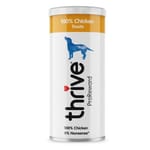
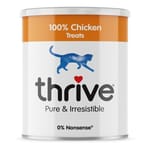
Rank 2: Thrive Freeze Dried Chicken for Cats and Dogs 170g – This product is composed entirely of chicken breast meat. The manufacturing process mirrors that of other freeze-dried items, involving initial freezing followed by vacuum-induced sublimation to extract moisture. The final product is characterized by its light weight and a dry, somewhat brittle texture, which can be easily broken into smaller pieces. The material consists predominantly of lean chicken protein, with the cellular structure of the muscle tissue largely preserved. The 170g quantity represents a substantial volume of the freeze-dried chicken. The inherent properties of chicken breast make it a widely accepted protein source for both feline and canine diets. The surface of these Thrive freeze-dried pet treats exhibits a slightly irregular, porous structure typical of freeze-dried meats.
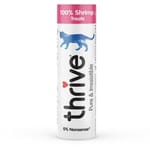
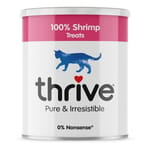
Rank 3: Thrive Freeze Dried Shrimp for Cats and Dogs 15g – This product is made exclusively from whole shrimp. The freeze-drying methodology is applied to whole shrimp, preserving their original form and exoskeleton. The material composition includes protein, chitin from the shell, and natural minerals present in shrimp. The resulting product is extremely lightweight due to the removal of water, and its texture is notably crisp and fragile. The 15g package contains a smaller quantity, often indicative of a more concentrated or specialized treat. The structural integrity of the individual shrimp is maintained, allowing for identification of the raw material. The distinct aroma of shrimp is concentrated in the freeze-dried form. This specific type of Thrive freeze-dried pet treats offers a different protein source compared to poultry or fish muscle.
Rank 4: Thrive Freeze Dried Chicken for Cats and Dogs 25g – This product, similar to the 170g variant, is composed solely of chicken breast. The processing involves the same freeze-drying technique, resulting in a product that is dry, lightweight, and maintains the fibrous texture of chicken muscle. The 25g package size indicates a smaller, perhaps single-serving or trial-sized quantity. The material properties are identical to the larger chicken breast offerings, focusing on high protein content and low moisture. The pieces are typically irregularly shaped, reflecting the natural form of the chicken breast portions prior to processing. These Thrive freeze-dried pet treats provide a convenient option for portion control.
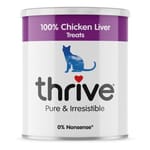
Rank 5: Thrive Freeze Dried Chicken Liver for Cats and Dogs 25g – This product consists entirely of chicken liver. The freeze-drying process transforms raw chicken liver into a lightweight, porous, and highly concentrated form. Chicken liver is known for its rich content of vitamins (especially A and B vitamins), iron, and other minerals, in addition to protein. The texture of the freeze-dried liver is typically more crumbly and less fibrous than muscle meat, due to the inherent structure of organ tissue. The 25g packaging signifies a smaller portion. The product retains the distinct, strong aroma characteristic of liver. These particular Thrive freeze-dried pet treats provide a nutrient-dense alternative to muscle-based treats, contributing to a varied dietary intake.
Thrive Freeze-Dried Pet Treats: Quality Standards and Labeling Transparency
The manufacturing and distribution of Thrive freeze-dried pet treats adhere to verifiable quality standards and emphasize labeling transparency, which are crucial for consumer understanding and product integrity. In many jurisdictions, pet food and treat manufacturing is subject to regulations that govern ingredient sourcing, processing hygiene, and finished product specifications. These regulations often mandate Good Manufacturing Practices (GMPs) to ensure consistent product quality and safety. For freeze-dried products, specific attention is paid to the raw material quality, ensuring that the source meats or seafood are fit for consumption. The freeze-drying process itself is a controlled environment, and monitoring of temperature and vacuum levels is standard practice to achieve the desired moisture content and preserve nutrient integrity. Post-processing, products are typically tested for residual moisture, microbial contamination, and sometimes for specific nutrient levels. Labeling transparency is a cornerstone of responsible pet product manufacturing. For Thrive freeze-dried pet treats, labels typically provide a clear and concise declaration of ingredients, often listing a single source protein (e.g., "100% Tuna" or "100% Chicken Breast"). This single-ingredient approach simplifies the ingredient list and reduces the potential for allergens or sensitivities to multiple components. Nutritional analysis, including guaranteed analysis, is also a standard feature, detailing minimum percentages of crude protein, crude fat, and maximum percentages of crude fiber and moisture. This information allows consumers to understand the macronutrient profile of the product. Manufacturers often provide batch numbers and expiration dates, which are essential for traceability and ensuring product freshness. Some brands may also include information about the origin of the raw materials or specific certifications related to sourcing or processing. The commitment to clear labeling provides an objective basis for evaluating the composition of Thrive freeze-dried pet treats.
Thrive Freeze-Dried Pet Treats: Factual Insights
A verifiable factual insight concerning Thrive freeze-dried pet treats, and freeze-dried pet products in general, relates to the energy expenditure during the freeze-drying process compared to other drying methods. Freeze-drying is known to be one of the most energy-intensive drying methods. This is primarily due to the significant energy required for the initial freezing stage and subsequently for maintaining the vacuum and providing the heat for sublimation. While it preserves product quality exceptionally well, the operational costs associated with the energy consumption are notably higher than those for air-drying, oven-drying, or even spray-drying. This inherent characteristic of the freeze-drying process influences production logistics and requires specialized equipment. Another insight pertains to the preservation of enzyme activity in certain freeze-dried products. Unlike heat-based drying methods that denature enzymes, the low-temperature, low-pressure environment of freeze-drying can, in some cases, preserve the activity of naturally occurring enzymes within the raw material. While Thrive freeze-dried pet treats primarily focus on muscle and organ meats, which have varying enzyme levels, this principle is particularly significant for products containing fruits, vegetables, or specific organ tissues known for their enzymatic content. The preservation of these enzymes can contribute to the overall biochemical profile of the treat, distinguishing it from products subjected to high-heat processing. This characteristic is a direct consequence of the physical principles governing the sublimation process and the avoidance of high temperatures.
The preceding text has provided a structural and compositional examination of Thrive freeze-dried pet treats. The discussion has focused on the classification criteria, material characteristics, processing methods, and relevant quality standards. This objective description aims to enhance the understanding of these products based on their inherent attributes.
......View All