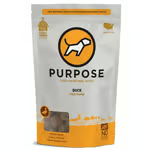
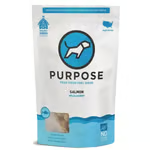
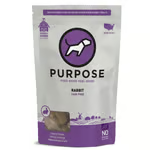
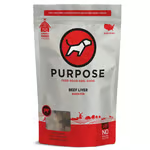
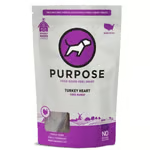
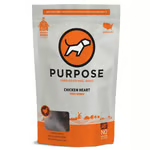
The PURPOSE cat and dog treats category encompasses a variety of pet food options, primarily serving as supplementary foods for cats and dogs for daily rewards or nutritional boosts. Products within this category come in diverse forms, including freeze-dried, jerky, and biscuits, catering to different chewing habits and preferences of pets. The ingredient composition of PURPOSE cat treats typically lists primary meat sources and other additives, aiming to provide pets with additional flavor and nutritional support. When making selections, pet owners can choose suitable PURPOSE cat and dog treats based on their pets' age, size, and dietary preferences. These pet treats are designed to function as training rewards or appetite enhancers in specific situations, distinguishing them from main meal cat food.
Pet treats, encompassing both cat and dog snacks, constitute a diverse category of supplemental food items designed for companion animals.
This article aims to describe the structural attributes, material composition, and usage context within the pet treats category. It will present verifiable, objective information without promoting purchase or providing selection advice.
Pet Treats: Common Divisions and Classifications
The pet treats category is commonly divided based on several primary criteria, reflecting differences in their intended use, physical form, and manufacturing processes. One fundamental classification differentiates treats by the target species, specifically cat treats and dog treats. While some products are formulated for both species, many are tailored to the distinct physiological and behavioral characteristics of felines and canines. Further divisions arise from the treat's primary function, such as training rewards, dental hygiene aids, or simply supplementary nutritional items. The physical form of pet treats also serves as a key classification metric, including categories like soft chews, crunchy biscuits, semi-moist morsels, and freeze-dried preparations. Each form implies specific manufacturing techniques and material compositions. Moreover, pet treats can be categorized by their dietary attributes, such as grain-free, limited ingredient, or hypoallergenic formulations, catering to specific dietary needs or sensitivities. The inclusion of functional ingredients, like probiotics or joint supplements, also establishes distinct subcategories within the broader pet treats domain. These divisions facilitate organization within the pet food industry and provide a framework for understanding product variations.
Pet Treats: Material Composition and Processing Techniques
The material composition and processing techniques employed in the creation of pet treats exhibit considerable variation, directly influencing their physical properties and nutritional profiles. Many pet treats utilize a primary protein source, which can range from conventional meats like chicken, beef, or lamb to novel proteins such as duck or venison. The form of this protein can be fresh, rendered meal, or freeze-dried. Carbohydrate sources often include grains like rice or corn, or grain-free alternatives such as sweet potato or peas, functioning as binders or energy providers. Fats, typically from animal sources or plant oils, contribute palatability and essential fatty acids. Additionally, pet treats frequently incorporate vitamins, minerals, and other dietary supplements to enhance nutritional completeness or provide specific health benefits. Processing techniques are diverse. Extrusion is a common method for creating kibble-like treats or biscuits, involving high heat and pressure to cook and shape ingredients. Baking is another process, particularly for crunchy treats, where doughs are formed and then cooked in ovens. Freeze-drying, a low-temperature dehydration process, removes water from raw or cooked ingredients while largely preserving their nutritional integrity and flavor. This method is prominent in the production of single-ingredient pet treats. Air-drying or slow-roasting techniques are also utilized, often for chews or jerky-style treats, to remove moisture gradually. The choice of processing method impacts the final texture, moisture content, and shelf stability of the pet treats, as well as the retention of heat-sensitive nutrients. Understanding these material and processing differences is essential for comprehending the diverse offerings within the pet treats category.
Pet Treats: Usage Environments and Conditions
The properties of pet treats can vary significantly across different usage environments or conditions, influencing their suitability and effectiveness. For instance, the moisture content of a pet treat directly affects its storage requirements. High-moisture, semi-moist treats often require refrigeration after opening to prevent microbial growth, whereas low-moisture products like freeze-dried or baked pet treats are typically shelf-stable in sealed packaging at room temperature. Environmental humidity can also impact the texture of certain treats; crunchy biscuits may soften in humid conditions if not properly stored, while softer chews might dry out and harden in arid environments. The context of use also dictates appropriate treat characteristics. For training purposes, small, easily digestible, and highly palatable pet treats are often preferred to maintain the animal's focus and avoid overfeeding. In contrast, dental chews are designed to be durable and require extended chewing, promoting mechanical abrasion against teeth. Treats intended for enrichment, such as those used in puzzle toys, often need to be appropriately sized and shaped to fit the device and withstand manipulation. The activity level of the pet also plays a role; highly active animals might benefit from pet treats with higher caloric density, while less active or weight-managed pets may require lower-calorie options. Furthermore, the presence of other pets or children in the household can influence the choice of pet treats, particularly regarding potential choking hazards or accessibility. Understanding these environmental and contextual factors allows for a more informed approach to the application of pet treats.
Pet Treats: Characteristics of Top-Selling Products
The following descriptions detail the material, formulation, and structural characteristics of the pet treats listed in the provided sales ranking. These descriptions are strictly factual and do not include usage recommendations or comparative evaluations. Each product represents a specific approach to pet treats formulation.
Rank 1: PURPOSE Freeze-Dried Raw Single Protein Beef Liver for Cats and Dogs 3oz — This product consists of freeze-dried beef liver. The formulation is single-protein, meaning beef liver is the sole animal protein source. The freeze-drying process removes moisture while maintaining the structural integrity of the liver tissue. The treats are presented in a solid, irregular form, characteristic of freeze-dried organ meats. The moisture content is typically very low, contributing to a prolonged shelf life without refrigeration when sealed.
Rank 2: PURPOSE Freeze-Dried Raw Single Protein Chicken Heart for Cats and Dogs 2.5oz — This item features freeze-dried chicken heart. As a single-protein formulation, chicken heart is the exclusive animal protein component. The freeze-drying method is employed to dehydrate the raw chicken heart, preserving its original nutrient profile. The resulting product is a lightweight, porous item retaining the general shape of chicken heart pieces. Its low moisture content contributes to its stability.
Rank 3: PURPOSE Freeze-Dried Raw Single Protein Turkey Heart for Cats and Dogs 3oz — Composed of freeze-dried turkey heart, this product is also a single-protein offering. The processing involves freeze-drying raw turkey heart, a method known for minimal degradation of heat-sensitive nutrients. The treats are individual pieces of dehydrated turkey heart, exhibiting the characteristic texture and appearance of freeze-dried organ meat. The low water activity of the product inhibits microbial growth.
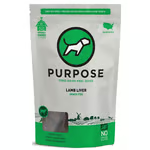
Rank 4: PURPOSE Freeze-Dried Raw Single Protein Lamb Liver for Cats and Dogs 3oz — This product is formulated with freeze-dried lamb liver. It is a single-protein treat, meaning lamb liver is the sole protein ingredient from animal sources. The manufacturing process utilizes freeze-drying to remove water from the raw lamb liver, resulting in a porous and lightweight final product. The treats are irregular pieces of dehydrated lamb liver, designed for extended shelf stability.
Rank 5: PURPOSE Freeze-Dried Raw Single Protein Duck Cubes for Cats and Dogs 2.5oz — This item consists of freeze-dried duck meat, presented in a cubed form. It is a single-protein pet treat, with duck as the exclusive animal protein component. The duck meat undergoes a freeze-drying process, which dehydrates the raw material while largely preserving its cellular structure and nutrient content. The treats are uniform cubes of freeze-dried duck, characterized by a low moisture level and a porous texture.
Pet Treats: Quality Standards and Labeling Norms
Verifiable quality standards, labeling transparency, and documentation norms are integral to the pet treats industry, providing consumers with information regarding product composition and safety. In many regions, pet treats are subject to regulations similar to those governing complete pet foods, typically overseen by governmental agricultural or food safety agencies. These regulations often dictate requirements for ingredient definitions, manufacturing practices, and labeling accuracy. Ingredient lists on pet treats packaging are mandated to be presented in descending order by weight, providing an indication of the relative proportions of components. Manufacturers are generally required to declare guaranteed analysis percentages for crude protein, crude fat, crude fiber, and moisture content, offering a basic nutritional profile. Specific claims, such as "grain-free" or "limited ingredient," necessitate adherence to defined criteria and often require substantiation. For pet treats, especially those marketed as "natural" or "organic," specific certification standards and auditing processes apply, ensuring that ingredients meet certain production and processing criteria. The presence of a batch number or lot code on packaging is a common norm, enabling traceability in the event of a product recall or quality issue. Furthermore, some regulatory frameworks require manufacturers to provide evidence of product safety and efficacy, particularly for treats that make functional claims, such as dental health benefits. Adherence to Good Manufacturing Practices (GMP) is often expected, ensuring consistent quality and safety throughout the production process of pet treats. These standards and norms collectively contribute to the reliability and transparency of pet treats available in the market.
Pet Treats: Factual Insights
Pet treats, despite their common usage, possess certain verifiable characteristics that are not always immediately apparent. One such insight pertains to the caloric density of freeze-dried pet treats. Due to the removal of water, which adds significant weight but no calories, freeze-dried treats often have a much higher caloric density per unit of weight compared to their fresh or canned counterparts. For example, a small piece of freeze-dried meat, while appearing light, may contain a concentrated amount of calories. This characteristic requires careful portion control to avoid unintentional overfeeding, particularly in smaller animals or those on weight management programs. Another factual insight concerns the role of texture in dental health pet treats. While some dental treats promote mechanical abrasion through their hardness and shape, others utilize specific enzymes or active ingredients coated onto or integrated within the treat matrix. These enzymatic pet treats work by helping to break down plaque and tartar or inhibit bacterial growth in the mouth, offering a biochemical approach to dental hygiene rather than solely relying on physical scrubbing. The effectiveness of such treats is often supported by scientific studies, and their claims are sometimes regulated and require specific substantiation. These examples illustrate specific attributes of pet treats that extend beyond their basic ingredient declaration.
This article has provided a structured overview of pet treats, detailing common classifications, material compositions, processing techniques, and the influence of usage environments. It has also presented factual descriptions of specific product characteristics and outlined relevant quality standards and labeling norms. The information presented is intended to enhance understanding of the category's structure.
......View All